Siwan Health Society, Bihar

Acute Encephalitis Syndrome (AES)
Overview
Acute Encephalitis Syndrome (AES) is a serious public health condition characterized by sudden onset of fever and inflammation of the brain. It primarily affects children and can rapidly progress to neurological complications such as confusion, seizures, and coma. AES remains a significant concern in several states of India, including Bihar, especially during seasonal outbreaks.
AES is not a single disease but a group of conditions caused by multiple infectious and non-infectious agents affecting the central nervous system.
Causes of AES
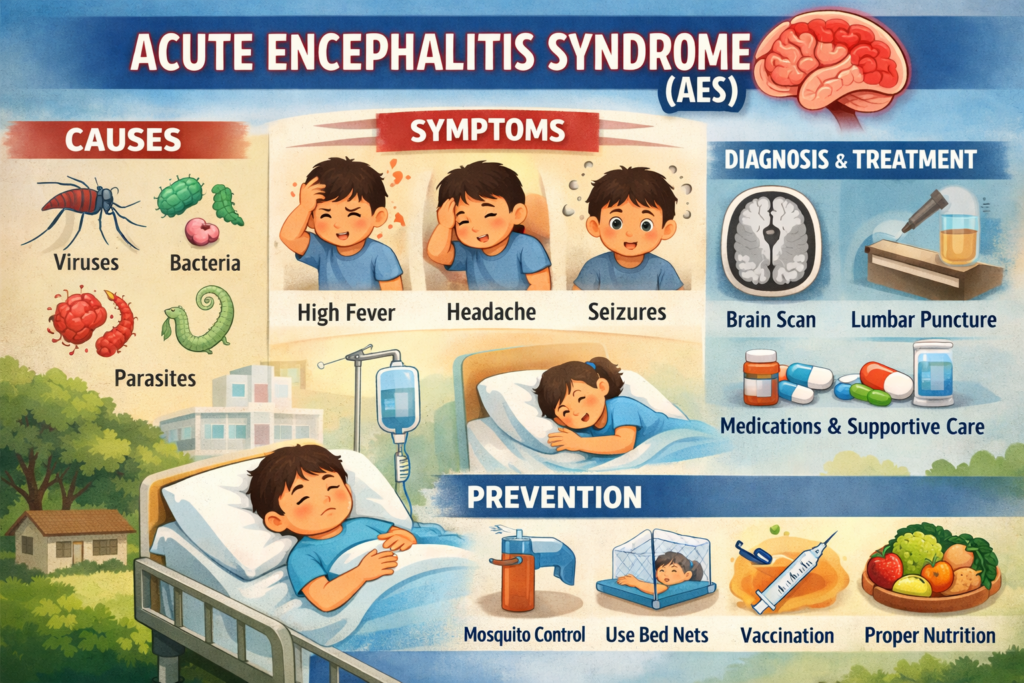
AES can be caused by a wide range of factors, including:
- Viral infections (most common) – e.g., Japanese Encephalitis Virus
- Bacterial infections
- Parasitic infections
- Fungal infections
- Toxins and environmental factors
In India, Japanese Encephalitis is one of the major causes, but other pathogens such as dengue, herpes simplex virus, and Chandipura virus also contribute.
Signs and Symptoms
AES usually begins with sudden high fever followed by neurological symptoms:
- High fever
- Severe headache
- Vomiting
- Confusion or disorientation
- Seizures (fits)
- Altered consciousness or coma
- Sensitivity to light
- Stiff neck
Early identification of symptoms is critical, as the disease can progress rapidly and become life-threatening.
Risk Groups
- Children (especially below 15 years)
- People living in rural and flood-prone areas
- Malnourished children
- Individuals exposed to poor sanitation and mosquito-prone environments
AES outbreaks are often seasonal, commonly occurring during summer and monsoon months.
Transmission
AES may spread through:
- Mosquito bites (vector-borne diseases like Japanese Encephalitis)
- Contaminated water or food
- Infections transmitted through animals or environment
Diagnosis
Early diagnosis is crucial and includes:
- Clinical examination
- Blood tests
- Cerebrospinal fluid (CSF) analysis
- Brain imaging (CT/MRI)
Treatment & Management
There is no single specific treatment for AES. Management includes:
- Immediate hospitalization
- Supportive care (fluids, oxygen, seizure control)
- Antiviral or antibiotic therapy depending on cause
- Intensive care for severe cases
Early treatment significantly improves survival rates.
Prevention
Preventive measures are key to controlling AES:
Community Level
- Mosquito control (fogging, eliminating stagnant water)
- Improved sanitation and hygiene
- Safe drinking water
Individual Level
- Use of mosquito nets
- Wearing protective clothing
- Proper nutrition for children
- Timely vaccination (especially Japanese Encephalitis vaccine)
Health System Measures
- Early detection and reporting
- Strengthening surveillance systems
- Awareness campaigns in high-risk areas
Government Initiatives
The Government of Bihar, under the National Health Mission (NHM), has taken multiple steps to control AES:
- Strengthening healthcare facilities in affected districts
- Training healthcare workers for early detection and management
- Free treatment and ambulance services
- Awareness campaigns on early symptoms and prevention
- Nutrition and child health programs
AES is a medical emergency. Early recognition, immediate referral, and proper treatment can save lives. Community awareness and preventive measures play a crucial role in reducing the burden of the disease.